Cycling · 22 September 2013
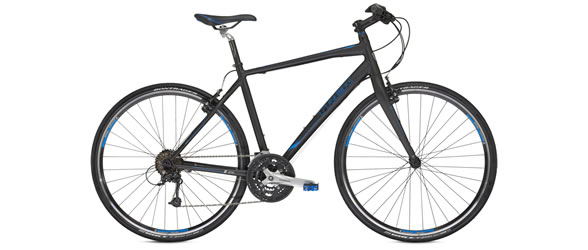
Why buy hybrid bike, Trek 7.4 FX review
Buying a hybrid bike is often described as settling for a compromise. The criticism has some merit: a hybrid will never match a dedicated road bike for speed, nor a mountain bike for rough terrain. But for a particular k
Buying a hybrid bike is often described as settling for a compromise. The criticism has some merit: a hybrid will never match a dedicated road bike for speed, nor a mountain bike for rough terrain. But for a particular kind of rider, that middle ground is exactly the point.
Why a hybrid made sense
The starting point was a 2009 Specialized Rockhopper mountain bike, used mainly on country lanes and gentle off-road trails, plus long weekend and all-day rides with friends over similar ground. The Rockhopper has never put a foot wrong, even shod with minimal-tread tyres. Yet on lane-heavy routes it sometimes felt like more bike than the job required.
Something lighter, faster and better suited to country lane cycling and easy trails seemed worth trying. Hence the Trek 7.4 FX, a hybrid or commuting model. Some would call it a flat bar road bike, though it is nowhere near as quick as a true road machine.
The Rockhopper has been kept for more demanding off-road riding.
The reasoning behind the Trek 7.4 FX
- It came in at just under a £600 budget.
- Trek came recommended by a local cyclist.
- A demo bike was ridden beforehand — a cheaper model, but sharing the same frame — and it felt right.
- The chainset and other components were reasonable and met the minimum standard wanted.
- The bike shop, Head for the Hills in Dorking, offered honest advice without any sense of a sales pitch.
The alternatives were a road bike or a cyclocross type. A road bike has not been ruled out for the future, but drop handlebars felt like a step too far at that point.
Early impressions
Three rides of between 17 and 33 miles followed. The Trek is lighter and faster than the Rockhopper on most roads, though slightly higher-geared, so hills feel like harder work, even if ascending speed seems much the same as on the mountain bike.
The absence of front suspension is noticeable, but the ride is not harsh — the carbon forks may well be doing their bit. The Trek uses V-brakes on the wheel rims, while the Specialized has disc brakes; so far there has been no significant difference between them, though that could change in the wet.
The Trek feels more compact than the Rockhopper, possibly down to narrower handlebars, though geometry surely plays a part. Cornering on roads has been a pleasant surprise: light, manoeuvrable and stable. The assumption had been that the mountain bike would corner better, but the Trek surpasses it on tarmac.
A more demanding test was planned: an all-day 75-mile ride a few weeks later. Overall, the early verdict on the Trek 7.4 FX was very positive.
Questions from other riders
On choosing between the Trek 7.4 and a Cannondale CW4: the advice was to ride both on short demos and make sure the frame size suits stature and leg length, with stand-over height particularly important. Good bike shops will allow demo rides and will watch a rider sitting astride the bike to assess size.
On whether the Trek would be bought again after three months: yes. It rides well, brakes well and corners well. The only slight negative is that some gear changes need a longer lever push than on the mountain bike, which may need adjusting — but overall, excellent.
On why the Trek DS range was not considered, given its lock-out suspension forks suit light trails while still handling well on roads: the aim was a hybrid closer to a road bike than a mountain bike. The DS sits nearer the trail-riding end of the equation, and suspension would add weight — a factor in the decision. Country lane riding was a slightly higher priority than trails, and the FX seemed better suited to that.
One rider planned to buy a 7.4 with tyres changed for canal trails, keeping a 7.7 for city and road use.